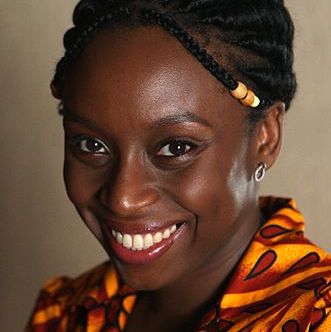
Chimamanda Ngozi Adichie
(b. 1977, Enugu, Nigeria) “We teach girls to shrink themselves, to make themselves smaller. We say to girls, you can have ambition, but not too much. You should aim to be successful, but not too successful. Otherwise, you would threaten the man. Because I am female, I am expected to aspire to marriage. I am expected to make my life choices always keeping in mind that marriage is the most important. Now marriage can be a source of joy and love and mutual support but why do we teach girls to aspire to marriage and we don’t teach boys the same? We raise girls to see each other as competitors not for jobs or accomplishments, which I think can be a good thing, but for the attention of men.”
Before gaining worldwide recognition for her contribution to Beyoncé's song ***Flawless", Adichie received widespread acclaim from critics and readers for her novels: Purple Hibiscus, Half of a Yellow Sun, The Thing Around Your Neck, and most recently, Americanah. In her work, which won her many accolades, she emphasizes the difficulties related to cultural assimilation, also regarding to varying approaches to women's rights in different regions of the world, especially Africa. She featured in the 2012 edition of Time's 100 Most Influential People in the World. She now divides her time between the United States and Nigeria. LEARN MORE
Watch Chimamanda's We should all be feminists talk on TEDxEuston in 2012:
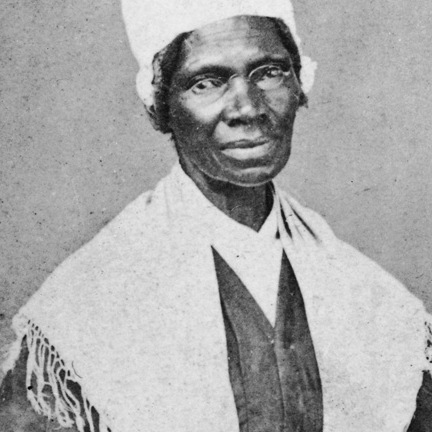
Sojourner Truth
(1797-1883, USA) Then that little man in black there, he says women can't have as much rights as men, 'cause Christ wasn't a woman! Where did your Christ come from? Where did your Christ come from? From God and a woman! Man had nothing to do with Him.
If the first woman God ever made was strong enough to turn the world upside down all alone, these women together ought to be able to turn it back, and get it right side up again! And now they is asking to do it, the men better let them.
Obliged to you for hearing me, and now old Sojourner ain't got nothing more to say.
From her famous "Ain't I a Woman?" Speech
Sojourner Truth was born into slavery in New York as Isabella Baumfree (after her father's owner, Baumfree). The meaning of her name, adapted by her in 1843, was the traveling preacher. In late 1840s she became a popular abolitionist, and since 1850 had campaigned for woman suffrage. Her most famous speech, Ain't I a Woman?, quoted above, was given in 1851 at a women's rights convention in Akron, Ohio.
During the Civil War, Sojourner Truth helped collecting food and clothing contributions for black regiments, and she met Abraham Lincoln at the White House in 1864, where she tried to challenge the discrimination that segregated street cars by race. After the war, she contributed to a movement providing jobs for black refugees from the war.
She remained active until 1875, speaking mainly to white audiences mainly on religion, "Negro" and women's rights. LEARN MORE ABOUT SOJOURNER
From her famous "Ain't I a Woman?" Speech
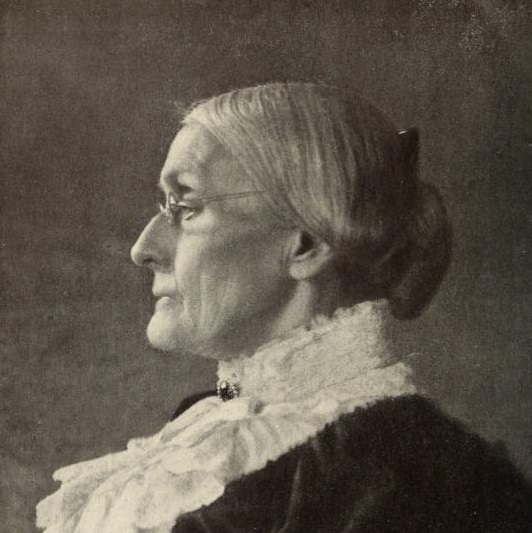
Susan B. Anthony
(1820-1906, USA) The preamble of the Federal Constitution says:
"We, the people of the United States, in order to form a more perfect union, establish justice, insure domestic tranquillity, provide for the common defense, promote the general welfare, and secure the blessings of liberty to ourselves and our posterity, do ordain and establish this Constitution for the United States of America."
The only question left to be settled now is: Are women persons? And I hardly believe any of our opponents will have the hardihood to say they are not. Being persons, then, women are citizens; and no state has a right to make any law, or to enforce any old law, that shall abridge their privileges or immunities. Hence, every discrimination against women in the constitutions and laws of the several states is today null and void, precisely as is every one against Negroes.
From Anthony's speech after her arrest in 1873
This American social reformer and feminist who played a crucial role in the women's suffrage movement, was socially and politically active, campaigning for racial and gender equality from age of 17. Together with Elizabeth Cady Stanton, whom she met in 1851, they founded the Women's Loyal National League in 1863, which resulted in the largest petition movement in US history (400,000 signatures supporting the abolition of slavery). Later, in 1866, they established the American Equal Rights Association, and, since 1868, had been responsible for publishing The Revolution, a newspaper advocating women's rights. Anthony, Stanton and Matilda Joslyn Gage devoted their lives to writing History of Woman Suffrage (which eventually turned into a six-volume book). In 1872, Anthony was arrested for illegally voting in her hometown of Rochester, New York, and later convicted to pay a $100 fine, which she refused to do. Anthony is responsible for creating and presenting the Nineteenth Amendment, however she unfortunately did not live long enough to see it legislated. A few years after her death, in 1920 the Anthony Amendment became the first US constitutional that gave the women the right to vote. LEARN MORE.
The only question left to be settled now is: Are women persons? And I hardly believe any of our opponents will have the hardihood to say they are not. Being persons, then, women are citizens; and no state has a right to make any law, or to enforce any old law, that shall abridge their privileges or immunities. Hence, every discrimination against women in the constitutions and laws of the several states is today null and void, precisely as is every one against Negroes.
From Anthony's speech after her arrest in 1873
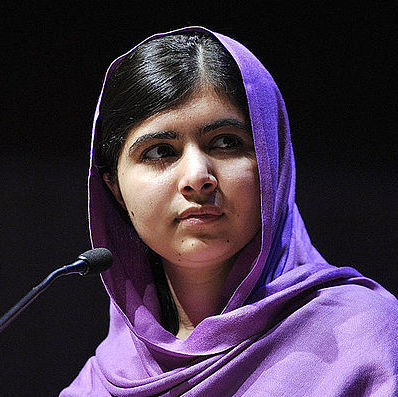
Malala Yousafzai
(b.1997, Pakistan) In Pakistan, when we were stopped from going to school, at that time I realized that education... Is the power for women, and that’s why the terrorists are afraid of education
Born in 1997, Malala is the youngest recipient ever of Nobel Prize (Nobel Peace Prize 2014, which she shared with Kailash Satyarthi, Indian children rights activist). This Pakistani struggled against the suppression of girls' rights to education. She grew up in Swat Valley, which was captured by the Talibans, who in 2009 shut down all girls’ schools in the region. During that time, Malala wrote a blog for BBC Urdu, describing her life during the conflict of the First Battle Of Swat.
As she became more and more popular, giving speeches about the importance of education (often asking How dare the Taliban take away my basic right to education?), she began to receive death threats from the Islamic extremists. After she continued her mission and the movement gained even more recognition, she was shot in the head by a masked Taliban on a school bus she embarked. Two other girls were injured.
Malala miraculously survived, after being taken to United Kingdom for convalescence, where she resides nowadays. The assassination attempt caused outrage in the Western media, with many celebrities, such as Madonna and Angelina Jolie, donating large sums of money to Malala’s fund. Even though she is still a target of death threats, she continues to advocate for her case, her focus being adolescent girls under threat of the Taliban in Pakistan, girls kidnapped or under threat of Boko Haram in Nigeria, girls in Syrian refugee camps in Jordan and Lebanon and adolescent girls affected by the ebola crisis in Sierra Leone. LEARN MORE ABOUT MALALA AND HER FUND
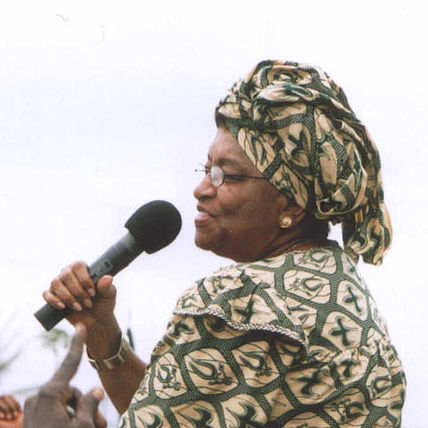
Ellen Johnson Sirleaf
(b. 1938, Liberia) Women work harder. And women are more honest; they have less reasons to be corrupt.
Known as The Iron Lady, Liberian politician and economist, who is the current president of Liberia, beginning in 2006. As the first woman to be elected head of state of an African country, she faced serious challenges in bringing the country together after tragic civil wars. Johnson Sirleaf was one of three recipients (together with Leymah Gbowee and Tawakkul Karman) of the 2011 Nobel Peace Prize for their fight for women's rights.
During her time as a minister of finances in Samuel K. Doe cruel dictatorship she was imprisoned twice, charged with treason and narrowly avoided execution. However, in order to avoid her 10-year sentence, she had to escape from Liberia. As a result, she spent the next 12 years in exile in Kenya and the US, when she acheived success as a competent financier. LEARN MORE
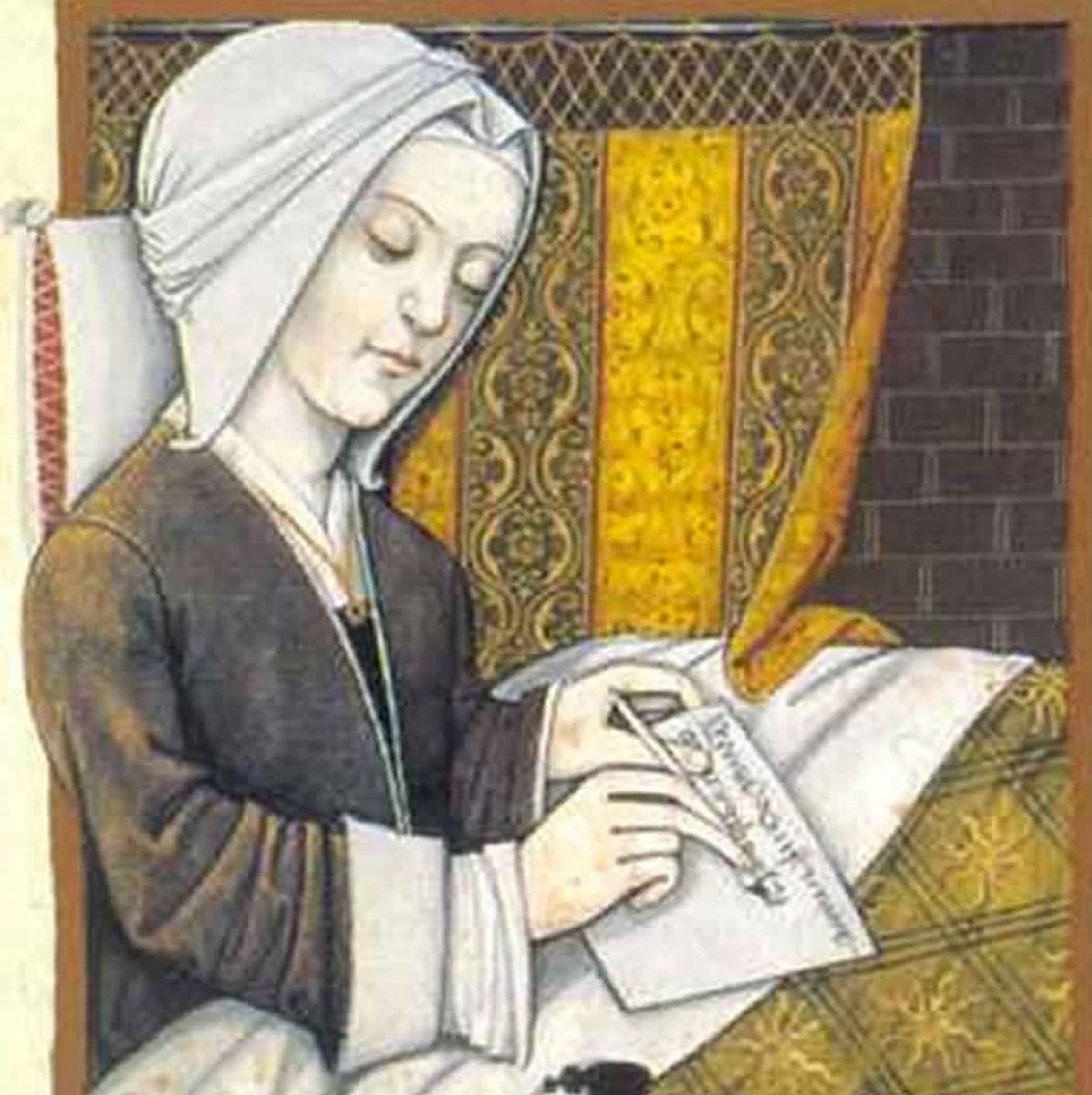
Christine de Pizan
(1365-1430, Italy, France)Yet if women are so flighty, fickle, changeable, susceptible, and inconstant (as some clerks would have us believe), why is it that their suitors have to resort to such trickery to have their way with them? And why don't women quickly succumb to them, without the need for all this skill and ingenuity in conquering them? For there is no need to go to war for a castle that is already captured.
From The Letter of the God of Love, 1399
Not all men (and especially the wisest) share the opinion that it is bad for women to be educated. But it is very true that many foolish men have claimed this because it displeased them that women knew more than they did.
From The Book of the City of Ladies (1405)
Described by Simone de Beauvoir as the first woman to take up her pen in defence of her sex, Christine the Pizan was a Renaissance writer who worked on courts of several dukes and the king Charles VI of France. She is credited with being the epitome of a woman who emancipated from the traditional roles assigned to her gender, in times when women had no legal rights whatsoever, were required to obey men and treated as their property. She also became the first woman in Europe to successfully make a living through writing.
She wrote in many different genres and styles, depending on her employers and patrons, but eventually, she began to debate about women (which was very extravagant at the time). Her works include: Letters to the God of Love (1399), The Take of the Rose (1402), and Letters on the Debate of the Romance of the Rose (1401-1403). Her magnum opus and her most famous book is The Book of the City of Ladies (1404-05), continued in the sequel Book of the Treasury of Ladies (1405). READ MORE OF CHRISTINE'S WORK
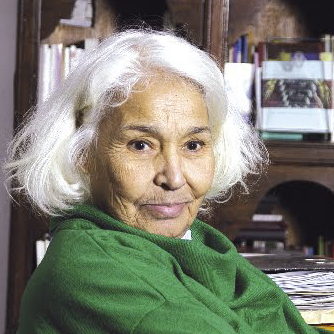
Nawal El Saadawi
(b. 1931 in Egypt) Women in most countries have not achieved much, because they can't be liberated under the patriarchal, capitalist, imperialist and military system that determines the way we live now, and which is governed by power, not justice, by false democracy, not real freedom.
Egyptian and Muslim author, feminist, psychiatrist, political acitivist with over 40 books and translated to many languages. She has endured jail and fundamentalist death lists but still continues to fight injustice both in her country and in the whole world. One of the most outspoken critics of genital mutilation. LEARN MORE
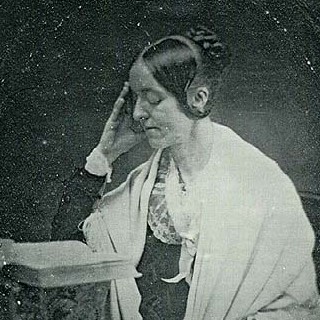
Margaret Fuller
(1810-1850, USA)Male and female represent the two sides of the great radical dualism. But in fact they are perpetually passing into one another. Fluid hardens to solid, solid rushes to fluid. There is no wholly masculine man, no purely feminine woman.
This American journalist, critic, and women's rights was the first full-time American female book reviewer in journalism (writing for Tribune, among others). Her book Woman in the Nineteenth Century, one of the first major feminist works, was a source of inspiration for generations of women to come.
Fuller strongly supported providing education to women, believing that they could push for equal political rights once they were granted the basic equality in education. She also encouraged women to seek any employment they wish and not to cater to the stereotypical feminine jobs, like for example teaching, by saying: If you ask me what office women should fill, I reply—any ... let them be sea captains if you will. I do not doubt that there are women well fitted for such an office.
She was also advocating for better life conditions in prisons (she once interviewed female prisoners in infamous Sing Sing facility) and for homeless, especially in New York, being shocked by their dire poverty. LEARN MORE ABOUT MARGARET